


NordVPN is the VPN I recommend and the one I use. The technology is good. The renewal price is the part that annoys me.
It has the longest audit record of the VPNs I covered in my 14-provider roundup: Deloitte Audit Lithuania checked its no-logs claim in early 2025, and a sixth Deloitte audit followed in February 2026. Its NordLynx protocol kept 85-96% of my base speed on local servers in my own testing. The money side is worse: the cheap headline price is a prepaid first term, and the plan then renews at a much higher rate.
It also has a history you should know about (a 2018 server breach), and its parent company also owns Surfshark. I cover both below. This review is current for August 2026. If something here does not match what you see on the checkout page, prices move often, so trust the page and tell me in the comments.
Quick verdict
- Verdict: recommended. It is the VPN I would pick for strong privacy plus fast speeds plus streaming that works.
- Good for: people who want one account on phones, computers and TVs, streamers, travellers on hotel and cafe Wi-Fi.
- Skip it if: you want the smallest possible account footprint (Mullvad is better for that), you need shared-server port forwarding, or you will forget to turn off auto-renewal.
- Price after renewal: the Basic plan renews at $139.08 per year (checked 11 August 2026), against a first term of $3.49 a month prepaid.
1. Speed: the best of the 14 I tested
Speed is why NordVPN sits at the top of my list. These are the results from my roundup. I tested from a 1 Gbps fibre connection in the EU, using WireGuard or each provider's equivalent protocol, to servers in Europe and the US. Each provider was tested across multiple sessions over two weeks.
| Test | My NordVPN result |
|---|---|
| Local servers, EU (NordLynx) | 85-96% speed retention |
| Peak download | 1200+ Mbps |
| EU to US (long distance) | 70-80% of base speed |
For comparison, Surfshark and Proton VPN dropped to 60-75% on the transatlantic route. Surfshark kept 75-90% on nearby servers.
In two weeks of daily use (browsing, video calls, streaming, file downloads), NordVPN and ExpressVPN were completely transparent: I could not tell the VPN was running. Surfshark and Proton VPN were nearly as smooth, with occasional buffering on 4K streams from distant servers.
Your numbers will differ. Speed depends on your ISP, Wi-Fi, distance and server load. On connections below 100 Mbps, every VPN on my list feels fast enough. The differences show up on 300+ Mbps lines or when you connect to another continent.
2. Privacy: audited no-logs claim, with limits
Every VPN says "no logs". Few have had it checked. NordVPN has the longest list in my roundup.
- Deloitte Audit Lithuania, 2025: the fifth no-logs assurance engagement ran from 18 November to 20 December 2024 under the ISAE 3000 (Revised) standard. It covered system configuration, supporting infrastructure and deployment processes for standard, Double VPN, Onion Over VPN, obfuscated and P2P servers. The announcement is dated 18 February 2025.
- Deloitte again, 2026: the sixth audit, reported by TechRadar. According to TechNadu's coverage, the fieldwork ran from 10 November to 12 December 2025 and the results came out in early February 2026.
- Cure53 security assessments: an assessment of the desktop and mobile apps and browser extensions (March 2025) and a later one of applications, APIs and infrastructure (announced December 2025).
My roundup counts "5+" audits by PwC, Deloitte, Cure53 and West Coast Labs. The 2025 and 2026 reports above came after that count.
Three limits are worth knowing. These audits are point-in-time checks, not a permanent guarantee. The full reports are only available to customers who log in to their Nord Account, so you cannot read them before you buy. And "no logs" covers your VPN activity. NordVPN still has your account and payment details. Only the Linux client is open source (GPLv3); the other apps are not, according to the Wikipedia entry and NordVPN's own materials.
NordVPN also says all its servers run on RAM, so nothing is written to disk and data disappears when a server restarts. In my roundup I describe the network as RAM-only infrastructure that physically cannot store data. Treat that as the company's claim, backed by the audits above.
3. Who owns NordVPN, and where it is based
NordVPN is run by Nord Security. Wikipedia describes it as a Lithuanian VPN service incorporated in Panama, with Nord Security as a Dutch company, and notes that Surfshark and Nord Security merged under one holding company in 2022. So NordVPN and Surfshark are siblings. I rank both in my roundup, and I do not see that as a problem on its own. You should still know it.
Panama sits outside the Five Eyes, Nine Eyes and Fourteen Eyes alliances, which is what I mean by a neutral jurisdiction in my roundup. Jurisdiction is one risk factor, not proof of trust. That is why I weigh it next to the audits.
Nord Security is not Kape Technologies. Kape owns ExpressVPN, CyberGhost and Private Internet Access, which is the main reason those three are on my "do not recommend" list.
4. The 2018 breach
A rented NordVPN server in Finland was breached. According to Wikipedia, the intrusion ran between 31 January and 20 March 2018 through a remote-management weakness at a contracted data centre. The data centre told NordVPN on 13 April 2019, and the news became public in October 2019 after a researcher raised it on Twitter. NordVPN was criticised for being slow to disclose it.
NordVPN said no user data was exposed, and experts found no sign that credentials or billing details were taken. In my roundup I note that the company responded by moving to self-owned hardware. NordVPN ended its relationship with that data centre.
The late disclosure was a fair complaint and counts against the company. Since then it has been audited regularly, and I still recommend it.
5. Pricing and the renewal trap
This is the weak spot. All numbers below are from NordVPN's pricing page and from price trackers (Gizmodo's pricing page, VPN Alert), checked in August 2026. Prices differ between sources and change during sales, so confirm at checkout.
| Plan (US) | Monthly | 2-year plan | Renews at |
|---|---|---|---|
| Basic | $14.99 | $3.49 a month, $94.23 prepaid for the first 27 months | $139.08 a year |
| Complete | $19.99 | About $4.49 a month ($3.99 during the Black Friday sale) | $219.48 a year |
| Prime | $29.99 | Higher; US-focused identity add-ons | $296.28 a year |
The $3.49 figure is not a month-to-month price. You pay about $94 up front, and when the term ends the plan renews at $139.08 a year, roughly $11.59 a month. My roundup warns about the same thing with older numbers ($41 a year on a two-year plan, rising to about $55). The pattern is identical and the gap has got wider.
My advice from the roundup stands: turn off auto-renewal on day one and set a calendar reminder. You can also buy a new plan when the old one ends instead of letting it renew. Some billing starts weeks before expiry, so check the date in your account.
All plans come with a 30-day money-back guarantee. Use it: connect to nearby and far servers, run a speed test, try streaming and make a video call on your phone.
Prices change often, so check the final amount on the checkout page.
6. Features and protocols
From the site's fact record and my roundup, these are the features that matter:
- NordLynx: NordVPN's own WireGuard-based protocol. It is the default and the reason for the speeds above. OpenVPN and IKEv2/IPsec are also available.
- NordWhisper: a protocol launched in 2025 that is meant to look like ordinary web traffic, for restrictive networks.
- Double VPN and Onion Over VPN: traffic goes through two servers, or on into the Tor network. Both are slower.
- Obfuscated and P2P servers: separate server types for restrictive networks and file sharing. In my roundup NordVPN is one of the few with consistent results in countries that block VPNs, but ask support before you travel.
- Dedicated IP: an optional fixed address, sold as an add-on.
- Threat Protection Pro: blocks ads, trackers and malicious sites at DNS level, per NordVPN. The full version with file scanning needs a higher plan and runs on Windows and macOS only, as my settings guide notes.
- Meshnet: private encrypted networks between your own devices.
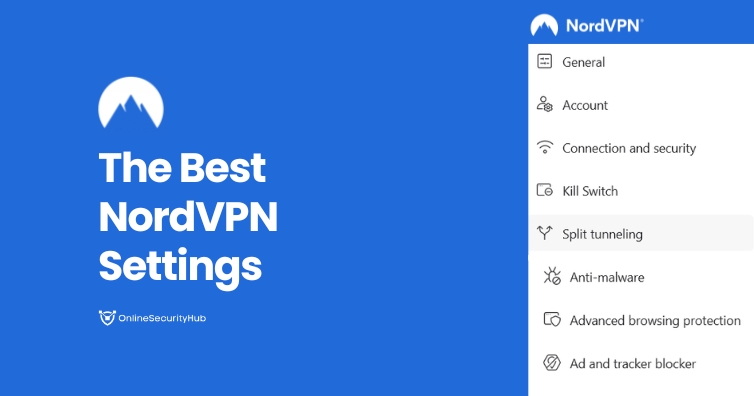
The post-quantum option is worth turning on, but it works only with NordLynx. It switches off Meshnet, and it does not work with Dedicated IP or obfuscated servers. I explain every toggle in my NordVPN settings guide.
The server count depends on the page you read. My roundup says 8,900+ servers in 129 countries. NordVPN's own site and other sources currently quote different totals (the site's fact record lists more than 6,400 servers in 111 countries, and Wikipedia says more than 8,000 as of January 2026). Counts vary because of virtual locations and update dates. Check what is listed for the country you need.
7. Streaming
In my roundup, NordVPN unblocks every major streaming platform reliably, and it is the best option for combining strong privacy with fast speeds and streaming. Streaming services block VPN addresses all the time, so no VPN can promise this forever. If one server fails, try another city in the same country.
8. Apps and devices
Apps cover Windows, macOS, Linux, Android, iOS, Android TV and Apple TV, plus browser extensions for Chrome, Edge and Firefox, per the fact record. An extension only protects the browser. Each account allows 10 devices at once, based on my settings guide. If you have more devices, put NordVPN on your router. Surfshark has no device limit, which is why I recommend it for big households.
In my roundup the apps feel less busy than Proton VPN's, though NordVPN has added features over time and the settings screens are long. My guide goes through them one by one.
9. Support
NordVPN lists 24/7 live chat and a help centre.
10. TrustPilot rating and what users say
My roundup recorded 4.1/5 from 46,000+ TrustPilot reviews. Common complaints about VPNs like this one are renewal prices and refund friction. These are user reports, not tests, and ratings change.
11. What I would use instead
| Alternative | Pick it when | Trade-off |
|---|---|---|
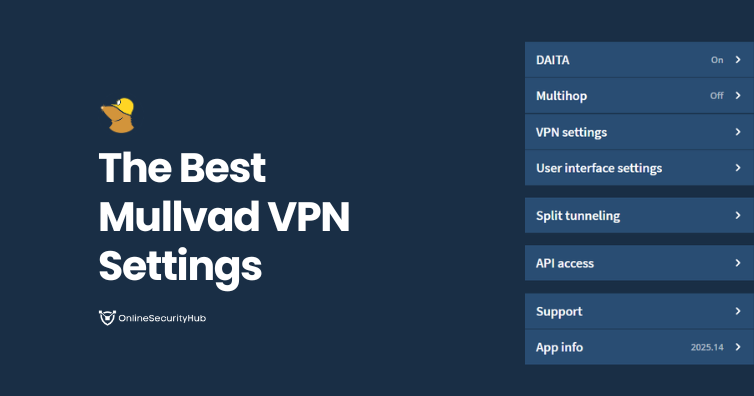
| Mullvad | You want the least data collected: no email, flat EUR 5 a month | About 700 servers in 49 countries, no Netflix unblocking, no live chat |
| Proton VPN | You want open-source apps and Swiss law | Busier apps, slower on nearby servers |
| Surfshark | You have many devices on a small budget | Same parent company, bigger drop on long routes |
See the full ranking in my best VPN roundup and the wider list at VPN services.
Who should buy NordVPN
Buy it if you want the best mix of speed, audits and streaming, and you are happy to manage the renewal yourself. Pick Mullvad or Proton VPN if privacy matters more than speed. Pick Surfshark if you need unlimited devices.
FAQ
Is NordVPN safe to use?
It has a long audit record, including Deloitte's engagements in 2025 and 2026, and Cure53 app assessments. It also had a 2018 server breach that it disclosed late. I recommend it with that history in mind.
Does NordVPN keep logs?
Deloitte's assurance engagements support its no-logs claim for VPN activity. It still keeps account and billing data.
How much does NordVPN cost after the first term?
Basic renews at $139.08 a year in the US as of August 2026, per the Gizmodo price check. Check your own checkout page.
Is there a refund?
Yes, 30 days on its pricing page. Buying directly from NordVPN keeps the process simple.
Who owns NordVPN?
Nord Security, which also owns Surfshark. The VPN company is incorporated in Panama.
How should I set it up?
Follow my NordVPN settings guide: NordLynx, Kill Switch on and multi-factor authentication on your account.
Comments 0
No comments yet. Questions, corrections and your own experience are all welcome.